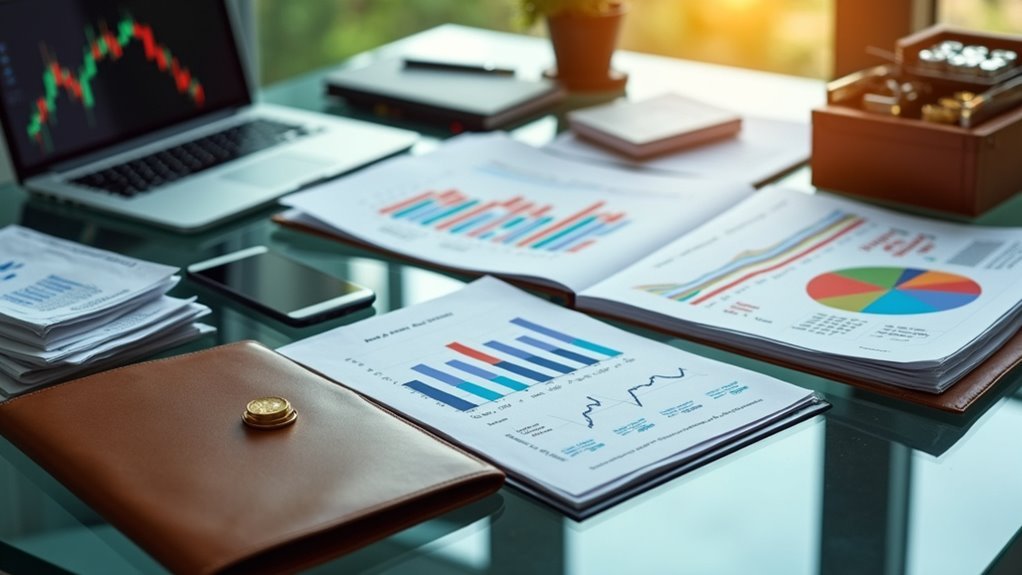
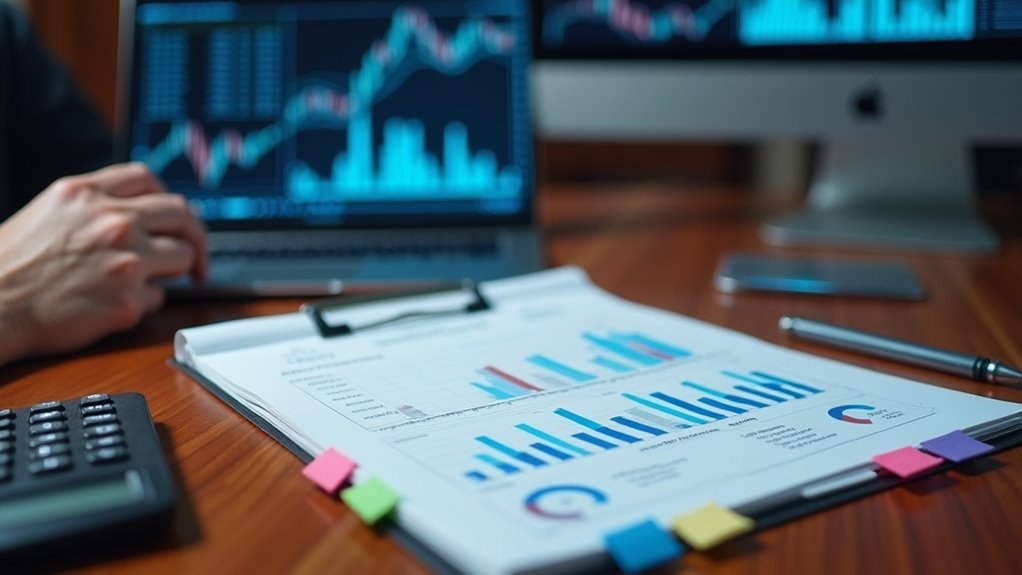
A stock exchange is a highly regulated marketplace where investors trade stocks, bonds, and other securities. It’s basically a giant financial matchmaking service connecting buyers and sellers through sophisticated electronic systems. Modern exchanges like the NYSE and NASDAQ process millions of trades daily using advanced technology and real-time data feeds. These centralized hubs serve as economic pulse points, maintaining market stability and helping companies raise capital. There’s more to this financial circus than meets the eye.
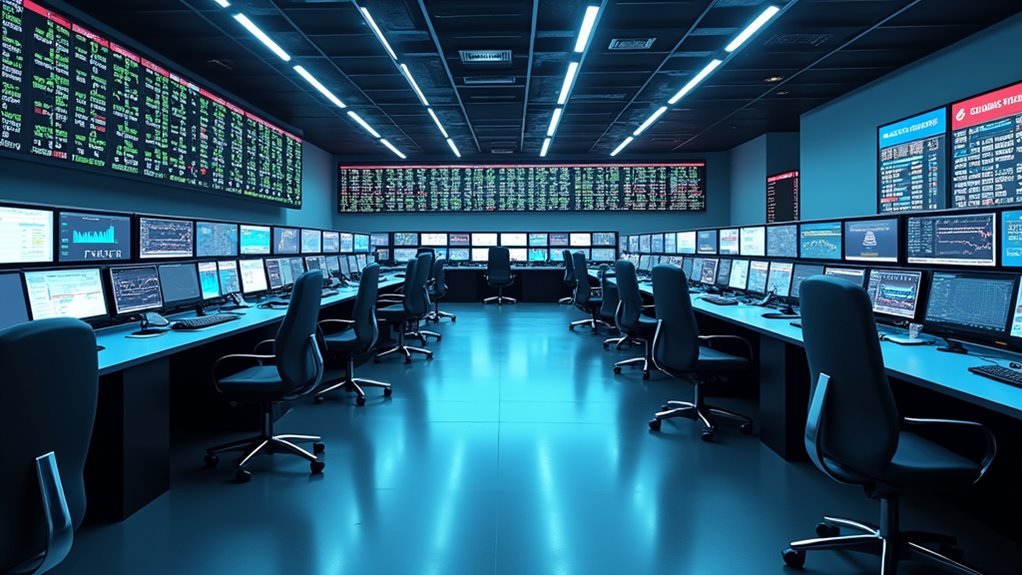
A stock exchange is more than just a place where rich people play with money – it’s the beating heart of modern capitalism. At its core, it’s a centralized marketplace where securities trading happens in a regulated environment. Think of it as a highly sophisticated financial matchmaking service, connecting buyers with sellers while ensuring everyone plays by the rules.
The big names in this game are household giants like the New York Stock Exchange and NASDAQ in the US, the London Stock Exchange in Europe, and the powerhouse exchanges in Asia like the Shanghai Stock Exchange and Tokyo Stock Exchange. Each one serves as a vital pipeline for companies to raise capital by selling shares to the public. And yes, they’re all heavily regulated – the SEC and other watchdogs make sure nobody’s pulling any funny business. Most investors now rely on online brokerage firms to execute their trades seamlessly.
From Wall Street to Shanghai, stock exchanges worldwide serve as trusted marketplaces where companies can tap into public capital under watchful regulatory eyes.
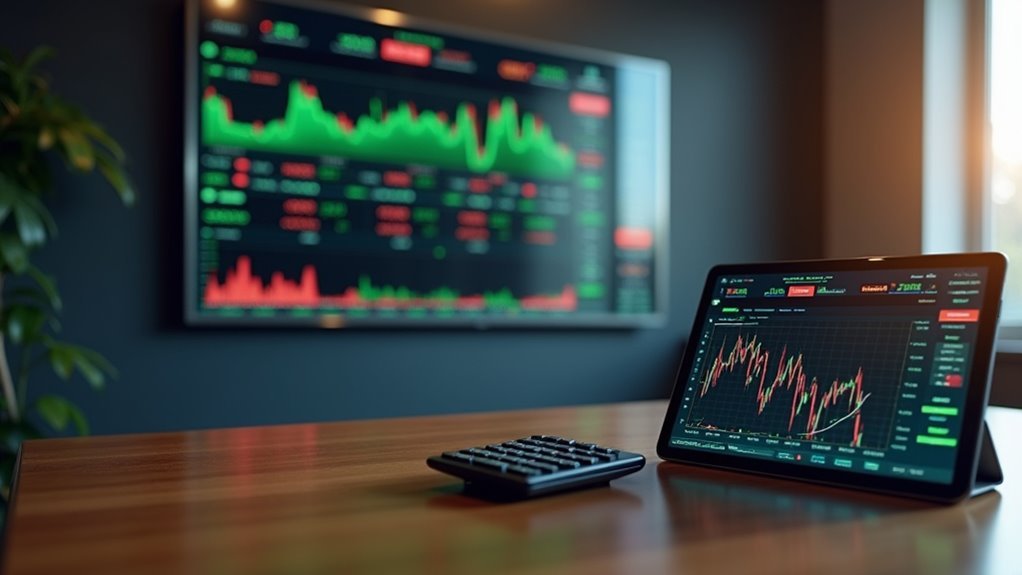
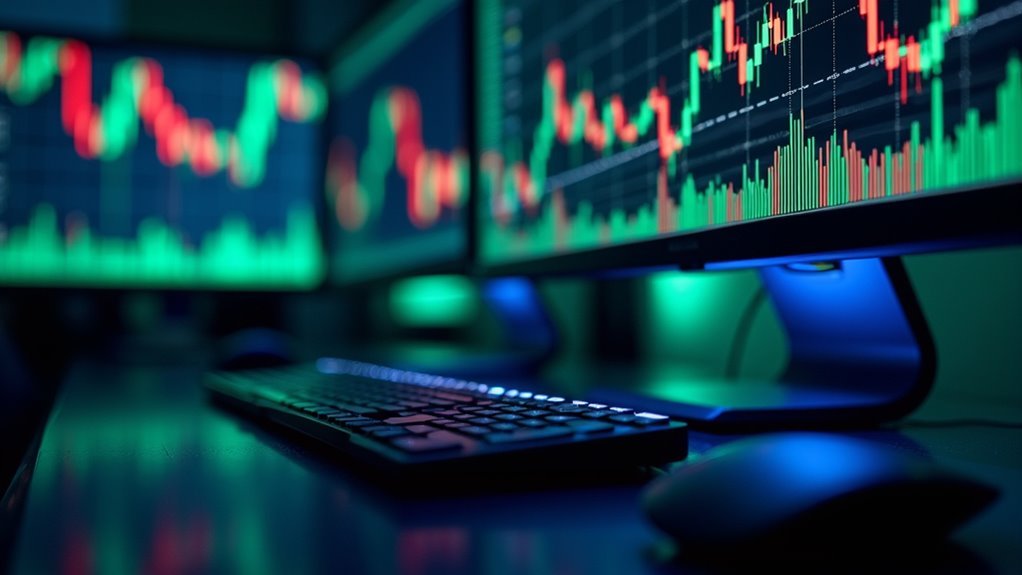
Gone are the dramatic days of traders screaming and waving papers on the exchange floor. Modern exchanges run on sophisticated electronic systems, with high-frequency trading algorithms executing millions of trades per second. Real-time data feeds pump out price information faster than you can blink, while blockchain technology is slowly creeping into the settlement process. All transactions are carefully monitored through a strict registration process.
These exchanges don’t just trade regular stocks – they’re home to a whole menu of financial instruments. Corporate bonds, government securities, ETFs, and even exotic derivatives all find their place here. It’s like a financial supermarket where institutional investors and regular folks alike can shop for investment opportunities. Major indexes like the S&P 500 serve as essential benchmarks for measuring overall market performance.
The impact of stock exchanges extends far beyond making or breaking fortunes. They serve as significant economic indicators – just watch how politicians and economists obsess over the S&P 500 index.
These marketplaces facilitate price discovery, provide liquidity for investors, and help maintain stability in financial markets. Sure, they might seem like complex beasts, but they’re essential cogs in the machine of modern finance. Without them, raising capital would be a mess, and investing would be about as organized as a yard sale.
Frequently Asked Questions
How Do I Protect Myself From Stock Market Losses and Volatility?
Investors typically protect against market volatility through diversification – spreading money across different investments like stocks, bonds, and real estate.
Smart moves include setting stop-loss orders, using dollar-cost averaging, and maintaining emergency cash reserves. A long-term perspective helps weather market storms.
Defensive strategies like dividend stocks and low-volatility investments can provide stability.
Markets go up and down – that’s just reality.
What Qualifications Do I Need to Become a Stock Trader?
Stock traders need serious credentials. No shortcuts here.
A bachelor’s degree in finance, economics, or business is standard. Must-have licenses include Series 7 and Series 63. The CFA certification? Definitely helps.
Math skills? Critical. Experience matters too – most start as trading assistants and work their way up.
Smart traders never stop learning. The markets change daily, and dinosaurs don’t survive.
How Long Should I Hold Stocks Before Selling Them?
The ideal holding period varies dramatically based on strategy and goals. Day traders hold for hours, swing traders for weeks.
But historical data shows longer holding periods – think years, not months – generally produce better returns. Warren Buffett famously says his favorite holding period is “forever.”
Research indicates 3-5 years often hits the sweet spot for risk-adjusted returns. Market timing? Good luck with that one.
Which Stock Exchanges Are Considered the Most Reliable Worldwide?
The NYSE stands at the top – period. It’s the biggest, oldest, and most heavily regulated exchange in the world.
Right behind it? NASDAQ, the tech-savvy powerhouse that revolutionized electronic trading.
The London Stock Exchange ranks third in reliability, with its iron-clad regulatory framework.
Tokyo Stock Exchange rounds out the top four, thanks to its strict disclosure rules and advanced infrastructure.
What Time Do Major Stock Exchanges Open and Close Globally?
Stock exchanges worldwide operate in distinct time zones.
North American markets like NYSE and Nasdaq run 9:30 AM to 4:00 PM ET.
European exchanges open mid-morning local time – LSE kicks off at 8:00 AM GMT, while continental exchanges start at 9:00 AM CET.
Asian markets vary wildly: Tokyo trades 9:00 AM to 3:00 PM JST, while Hong Kong goes until 4:00 PM HKT.
It’s like a global relay race of money.